

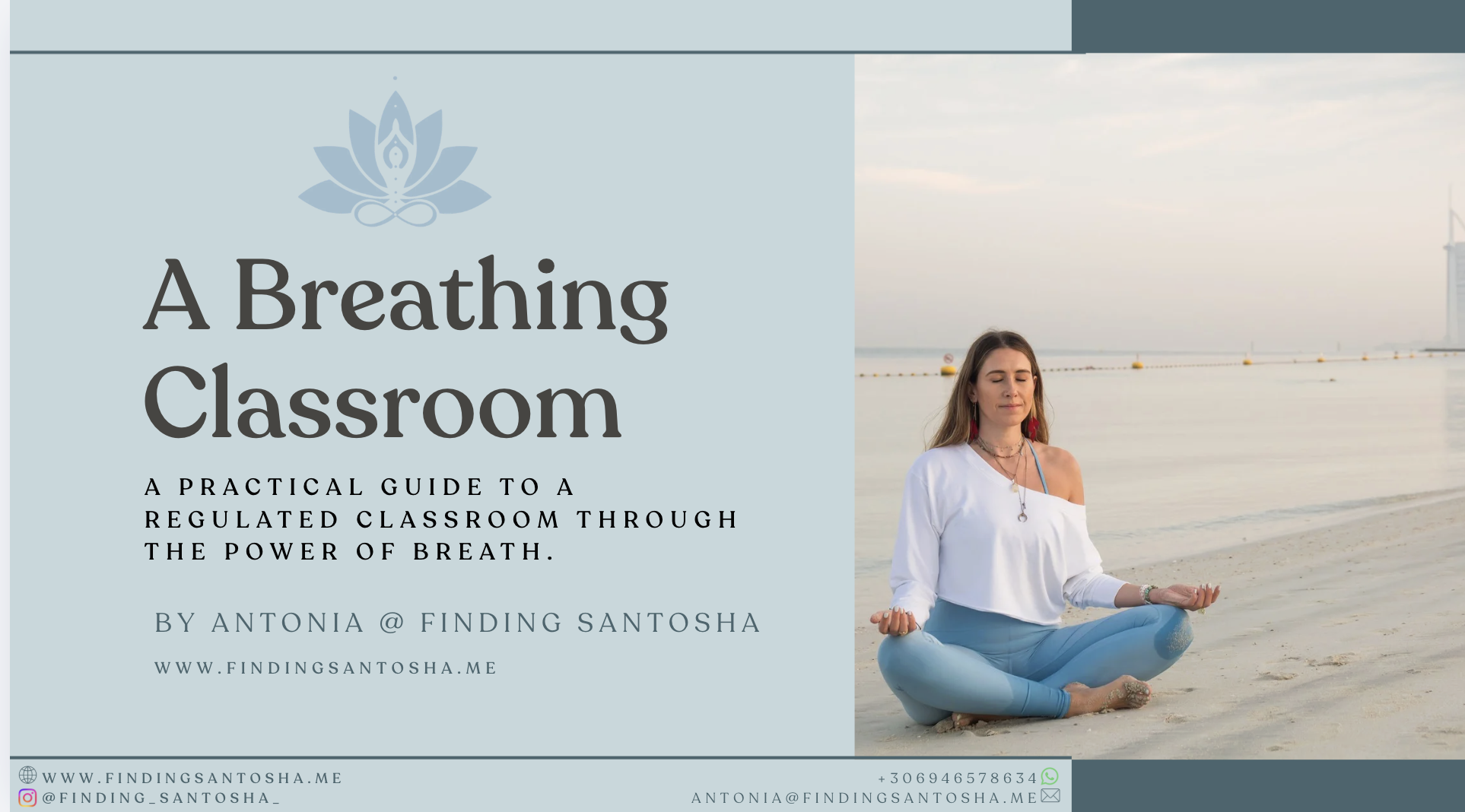
A Breathing Classroom
A practical guide to a regulated classroom, using the power of breath.

By the end of this course, you will understand the connection between breathing, regulation, learning and behaviour, and have the practical tools to create a more connected, responsive and regulated classroom.
-
-
Welcome & Orientation
Welcome to A Breathing Classroom. In this short orientation, you'll learn how the course is structured, where to find your handbook and practical resources, and how to access the community and support available throughout your journey.
Welcome to A Breathing Classroom. In this short orientation, you'll learn how the course is structured, where to find your handbook and practical resources, and how to access the community and support available throughout your journey.
-
-
-
Lesson 1: Welcome to The Breathing Classroom
We break things down into simple, manageable parts so you never feel overwhelmed.
We break things down into simple, manageable parts so you never feel overwhelmed.
-
Lesson 2: Why are Classrooms Struggling?
Today's classrooms are facing unprecedented challenges. Together we'll explore the changing educational landscape and why understanding the nervous system has never been more important.
Today's classrooms are facing unprecedented challenges. Together we'll explore the changing educational landscape and why understanding the nervous system has never been more important.
-
Lesson 3: The Future of Education
What if education focused not only on what children learn, but on the conditions that make learning possible? This lesson explores a vision for education that places regulation, wellbeing and connection alongside academic success.
What if education focused not only on what children learn, but on the conditions that make learning possible? This lesson explores a vision for education that places regulation, wellbeing and connection alongside academic success.
-
Lesson 4: A Vision For Your Classroom
Before learning new strategies, take a moment to imagine the classroom you hope to create. This reflection will become your compass throughout the course.
Before learning new strategies, take a moment to imagine the classroom you hope to create. This reflection will become your compass throughout the course.
-
-
-
Lesson 1 : Knowing the Nervous System
Discover the foundations of the autonomic nervous system and how it quietly shapes behaviour, learning and relationships every day.
Discover the foundations of the autonomic nervous system and how it quietly shapes behaviour, learning and relationships every day.
-
Lesson 2 : Seeing the States for Survival
Learn to recognise the different survival states and begin understanding behaviour as communication rather than compliance.
Learn to recognise the different survival states and begin understanding behaviour as communication rather than compliance.
-
Lesson 3: The Breath as a Bridge
Explore why breathing offers a unique pathway between body and mind, making it one of our most accessible tools for supporting regulation.
Explore why breathing offers a unique pathway between body and mind, making it one of our most accessible tools for supporting regulation.
-
-
-
Lesson 1: Internal Conditions for Learning
Learning is about far more than attention or intelligence. Explore the internal conditions that help children feel safe enough to engage, explore and learn.
Learning is about far more than attention or intelligence. Explore the internal conditions that help children feel safe enough to engage, explore and learn.
-
Lesson 2 : The System's Stages
Discover how nervous system development unfolds across childhood and what this means for the way children regulate, relate and respond.
Discover how nervous system development unfolds across childhood and what this means for the way children regulate, relate and respond.
-
Lesson 3: A Classroom Reflection
Pause to reflect on your own classroom through this new lens, considering how understanding the nervous system may already be changing what you notice.
Pause to reflect on your own classroom through this new lens, considering how understanding the nervous system may already be changing what you notice.
-
-
-
Lesson 1: The Science & Mechanics of Breathing (Copy)
Understand how breathing works, why it matters, and how simple changes in breath can influence the entire body.
Understand how breathing works, why it matters, and how simple changes in breath can influence the entire body.
-
Lesson 2: The Impact of Breathing
Explore how different breathing patterns influence attention, emotion, energy and nervous system regulation throughout the day.
Explore how different breathing patterns influence attention, emotion, energy and nervous system regulation throughout the day.
-
Lesson 3: Observing Your Own Breath
Experience the power of observation by becoming curious about your own breathing patterns and what they reveal.
Experience the power of observation by becoming curious about your own breathing patterns and what they reveal.
-
-
-
Lesson 1: Resonance, Empathy & Co-regulation
Our nervous systems are constantly influencing one another. Explore how resonance, empathy and co-regulation shape classroom relationships and why your own state is one of the most powerful tools you bring into the room.
Our nervous systems are constantly influencing one another. Explore how resonance, empathy and co-regulation shape classroom relationships and why your own state is one of the most powerful tools you bring into the room.
-
Lesson 2: From Reacting to Responding
Every challenging moment presents a choice. Learn how to recognise your own activation, create space before reacting, and respond with greater presence, flexibility and intention.
Every challenging moment presents a choice. Learn how to recognise your own activation, create space before reacting, and respond with greater presence, flexibility and intention.
-
Lesson 3: Restore & Regulate: A Self-Regulation Routine
Supporting others begins with supporting yourself. Develop a practical self-regulation routine that helps you restore your own nervous system throughout the school day.
Supporting others begins with supporting yourself. Develop a practical self-regulation routine that helps you restore your own nervous system throughout the school day.
-
-
-
Lesson 1: The Principles of Breathing Practice
Effective breathing isn't about choosing the "right" technique, it's about knowing when, why and how to offer it. Discover the principles that underpin every breathing invitation in this course.
Effective breathing isn't about choosing the "right" technique, it's about knowing when, why and how to offer it. Discover the principles that underpin every breathing invitation in this course.
-
Lesson 2: Setting the Scene
Before breathing can become a supportive classroom tool, it must first feel safe, familiar and meaningful. Learn how to introduce breathing to your class with confidence and curiosity.
Before breathing can become a supportive classroom tool, it must first feel safe, familiar and meaningful. Learn how to introduce breathing to your class with confidence and curiosity.
-
Lesson 3: Building the Foundations
Strong foundations create lasting habits. Explore how to establish routines, expectations and experiences that allow breathing to become a natural part of everyday classroom life.
Strong foundations create lasting habits. Explore how to establish routines, expectations and experiences that allow breathing to become a natural part of everyday classroom life.
-
-
-
Lesson 1: Developmental Stages
Children engage with breathing differently as they grow. Discover how development influences the way breathing is introduced, experienced and supported across different ages.
Children engage with breathing differently as they grow. Discover how development influences the way breathing is introduced, experienced and supported across different ages.
-
Lesson 2: Progressive Practices
Build your library of breathing invitations through a collection of practical, playful and purposeful activities designed to support a range of classroom needs and nervous system states.
Build your library of breathing invitations through a collection of practical, playful and purposeful activities designed to support a range of classroom needs and nervous system states.
-
-
-
Lesson 1: Embed
Breathing becomes most effective when it is woven into everyday classroom life. Explore how regular routines create familiarity, safety and confidence before moments of challenge arise.
Breathing becomes most effective when it is woven into everyday classroom life. Explore how regular routines create familiarity, safety and confidence before moments of challenge arise.
-
Lesson 2: Respond
Learn how to thoughtfully respond to both the collective classroom and individual children using the principles you've developed throughout the course, offering breathing as a supportive invitation rather than a quick fix.
Learn how to thoughtfully respond to both the collective classroom and individual children using the principles you've developed throughout the course, offering breathing as a supportive invitation rather than a quick fix.
-
Lesson 3: Extend
A Breathing Classroom doesn't stop at breathing techniques. Discover how to extend this approach into classroom culture, behaviour support, curriculum experiences and partnerships with families.
A Breathing Classroom doesn't stop at breathing techniques. Discover how to extend this approach into classroom culture, behaviour support, curriculum experiences and partnerships with families.
-
-
-
Practise 1: Take a Moment
Take afew moments here, resting in the intimacy of your breath. How do you feel?
Take afew moments here, resting in the intimacy of your breath. How do you feel?
-
Practise 2: Finding your Feet
Try this anchoring practise and remember that you can return to it as many times as you need during the day and before the practises in this course.
Try this anchoring practise and remember that you can return to it as many times as you need during the day and before the practises in this course.
-
Practise 3: A Vision For Your Classroom
As you listen to the guided practise, observe the vision for your classroom. Try to use all your senses and remember there is no right or wrong as you let your desires be seen.
As you listen to the guided practise, observe the vision for your classroom. Try to use all your senses and remember there is no right or wrong as you let your desires be seen.
-
Practise 4: Breath Witness
As you listen to the guided practise, notice how you feel. Observing what changes as you bring awareness to your breath, to the way your breath moves through your body. As you open your eyes, notice what feels different now compared to before.
As you listen to the guided practise, notice how you feel. Observing what changes as you bring awareness to your breath, to the way your breath moves through your body. As you open your eyes, notice what feels different now compared to before.
-
Practise 5: Sensing Safety
During this guided practise, you are invited to notice what brings you a felt sense of safety. As you notice the images or memories, try to connect with the felt sense of safety. How does your body tell you it feels safe? Practise this as many times as you can, in as many scenarios to help you resource throughout the day. You can write a list of things to draw on if that would he helpful or notice in each new moment.
During this guided practise, you are invited to notice what brings you a felt sense of safety. As you notice the images or memories, try to connect with the felt sense of safety. How does your body tell you it feels safe? Practise this as many times as you can, in as many scenarios to help you resource throughout the day. You can write a list of things to draw on if that would he helpful or notice in each new moment.
-
Practise 6: Breath Mechanics Awareness
As you are taken through this practise, start to bring awareness to the way your breath and body respond to each other? What happens within your body as you breathe, where do you feel the breath moving through? What parts of your body do you notice the breath?
As you are taken through this practise, start to bring awareness to the way your breath and body respond to each other? What happens within your body as you breathe, where do you feel the breath moving through? What parts of your body do you notice the breath?
-
Practise 7: Physiological Sigh
A physiological sigh is a natural breathing pattern consisting of two quick inhales followed by a long, slow exhale. It is a quick way to lower stress in real time, fix oxygen levels, and calm your mind by reinflating air sacs, removing excess carbon dioxide and slowing heart rate. The long exhale signals your nervous system to switch off the fight-or-flight response and relax.
A physiological sigh is a natural breathing pattern consisting of two quick inhales followed by a long, slow exhale. It is a quick way to lower stress in real time, fix oxygen levels, and calm your mind by reinflating air sacs, removing excess carbon dioxide and slowing heart rate. The long exhale signals your nervous system to switch off the fight-or-flight response and relax.
-
Practise 8: Heart Breathing
Try this heart breathing practise that focuses on connecting with the heart space and tuning into the Vibrational Energy of the Heart. The heart’s electromagnetic field radiates outside of the physical body, extending roughly 3 to 5 feet away. People can physically and subconsciously sense this field which explains why we can feel a stranger's kindness or tension without them saying a word.
Try this heart breathing practise that focuses on connecting with the heart space and tuning into the Vibrational Energy of the Heart. The heart’s electromagnetic field radiates outside of the physical body, extending roughly 3 to 5 feet away. People can physically and subconsciously sense this field which explains why we can feel a stranger's kindness or tension without them saying a word.
-
Practise 9: Clearing Out
As a teacher, you are taking on so much energy throughout the day that you might not be aware of. Try this practise throughout the day or just at the end of the day to clear out what you might be holding for others. Imagine releasing (hooking or shower) releasing the energy from the day or a particular interaction as you return to yourself.
As a teacher, you are taking on so much energy throughout the day that you might not be aware of. Try this practise throughout the day or just at the end of the day to clear out what you might be holding for others. Imagine releasing (hooking or shower) releasing the energy from the day or a particular interaction as you return to yourself.
-
Practise 10: The Space Between
Notice the space between your inhale and exhale and allow it to remind you that space exists between what you notice and the story your mind tells you. The moment of perspective may serve as a reminder that it’s not always a personal attack or a behavior problem so you’re able to see the exchange of (often) unspoken information more clearly in order to respond rather than react. Try this practise together and then use it on your own whenever you need.
Notice the space between your inhale and exhale and allow it to remind you that space exists between what you notice and the story your mind tells you. The moment of perspective may serve as a reminder that it’s not always a personal attack or a behavior problem so you’re able to see the exchange of (often) unspoken information more clearly in order to respond rather than react. Try this practise together and then use it on your own whenever you need.
-
Practise 11: Self Check-in | Restore & Regulate
A gentle morning practice inspired by the Ayurvedic tradition of greeting the day with awareness and intention. Using simple breath and body awareness, we pause before stepping into the demands of the day, noticing how we feel and consciously choosing how we want to arrive.
A gentle morning practice inspired by the Ayurvedic tradition of greeting the day with awareness and intention. Using simple breath and body awareness, we pause before stepping into the demands of the day, noticing how we feel and consciously choosing how we want to arrive.
-
Practise 12: Mindful Moment | Restore & Regulate
A simple practice inspired by Nāḍī Śodhana, using the breath to alternate gently between the left and right nostrils. This practice offers a moment to pause, rebalance and reset before moving into the rest of the day.
A simple practice inspired by Nāḍī Śodhana, using the breath to alternate gently between the left and right nostrils. This practice offers a moment to pause, rebalance and reset before moving into the rest of the day.
-
Practise 13: Rest and Recover | Restore & Regulate - With Retention
A structured breathing practice using four equal parts: inhale, hold, exhale and hold. The steady rhythm can offer a simple point of focus, helping to create a pause between what has happened and what comes next.
A structured breathing practice using four equal parts: inhale, hold, exhale and hold. The steady rhythm can offer a simple point of focus, helping to create a pause between what has happened and what comes next.
-
Practise 14: Rest and Recover | Restore & Regulate - Without Retention
A gentle alternative to breath retention, where the exhale is slightly longer than the inhale. By slowing and lengthening the outward breath without force, this practice creates space to soften, settle and return to a steadier rhythm.
A gentle alternative to breath retention, where the exhale is slightly longer than the inhale. By slowing and lengthening the outward breath without force, this practice creates space to soften, settle and return to a steadier rhythm.
-
Practise 15: Becoming the Container
As a teacher, you have the privilege and responsibility to become the container and anchor for the children in the class, providing them with the stability their nervous systems need the most to feel safe. This practise supports you in embodying the experience of becoming the container for yourself and the children in your class. Notice the steadiness and capacity within you, the way you are able to move through the day and the impact it has on the class.
As a teacher, you have the privilege and responsibility to become the container and anchor for the children in the class, providing them with the stability their nervous systems need the most to feel safe. This practise supports you in embodying the experience of becoming the container for yourself and the children in your class. Notice the steadiness and capacity within you, the way you are able to move through the day and the impact it has on the class.
-
-
-
A Breathing Classroom: Closing
A closing reflection to honour how far you've come, revisit your learning and imagine the teacher you are becoming. We'll explore how to take the principles of A Breathing Classroom into practice and begin integrating them into your classroom, school and wider community.
A closing reflection to honour how far you've come, revisit your learning and imagine the teacher you are becoming. We'll explore how to take the principles of A Breathing Classroom into practice and begin integrating them into your classroom, school and wider community.
-
The Pillars of “A Breathing Classroom”
Seeing beyond behaviour:
Understanding the nervous system and its role in development, wellbeing and learning.
The Nervous System of the Adult:
Developing self-awareness, self-regulation and co-regulation as the foundation for classroom culture.
The Breath Toolkit:
Building a practical toolkit of age-appropriate breathing practices to support focus, calm, connection and learning.
Beyond a Tick Sheet
Embedding breathing and body-based regulation into everyday classroom life in meaningful and sustainable ways.
What Educators are Saying
Frequently Asked Questions
-
Teachers, teaching assistants, school leaders and other education professionals who want practical, body-based tools to support their own regulation and create calmer, more connected classrooms.
-
No. You will learn many practical breathing practices for both teachers and children, but the course explores the foundations of learning, behaviour, the physiology of the nervous system and how breathing can become the greatest tool when we know how to use it effectively.
Rather than simply learning how we breathe or ways to do it, we dive into how our states shape the classroom and learnign potential.
-
No. The course is designed for complete beginners as well as educators who already have experience with mindfulness, breathwork or regulation practices.
-
You have access to 10 hours of video content across 8 modules, plus a 90 page handbook with reflection activities, classroom practises and a library of teacher practices. We recommend completing one module weekly to provide the space for reflection, implementation and integration but this is a self-paced course so you can work through the content at your own pace.
-
Your access to the course has no set expiry date. Once you enrol, you can work through the modules and return to the course content at your own pace, whenever you need to, there is no deadline to complete the course.
Course access will remain available for as long as A Breathing Classroom continues to be offered online.
Your online community support is included for the first 3 months, giving you access to the WhatsApp community and monthly Zoom sessions. After your initial 3 months, you'll have the option to continue your community membership for as long as you'd like.
-
You'll have the option to continue as part of the A Breathing Classroom community, with ongoing WhatsApp connection and monthly Zoom sessions. Your first three months are included with the course.
We also host workshops for school communities (parents and educators) on any of the topics covered in this course so you can reach out if this is something you would like more information on.
-
A Breathing Classroom is currently an independent professional-development programme. Accreditation/recognition is something I am working towards in the future as the programme develops. You will be notified when this happens and offered a conversion (rather than full) rate if you’s like accreditation.
-
A Breathing Classroom is designed to be taken individually by educators but we also offer a school-based workshops and partnerships for school communities who are interestied in implementing this within the whole school. You can reach out directly at antonia@findingsantosha.me to discuss what your school needs.